Table of Contents
The debate around hybrid mattress vs memory foam is one of the most searched mattress comparison topics because buyers want a clear answer before they purchase. For consumers, the question is usually about comfort. For B2B buyers, the question is bigger: which mattress construction is easier to sell, ship, customize, and support after delivery?
This guide is written for importers, wholesalers, hotel buyers, distributors, and furniture retailers who need a practical sourcing perspective. It compares hybrid and memory foam mattresses through construction, comfort, cooling, packaging, inspection, and channel fit rather than only personal preference.
Why This Keyword Matters for B2B Mattress Buyers
A sourcing team can use this keyword as a product planning signal. When end users ask about hybrid mattress vs memory foam, they are often concerned about sleeping temperature, pressure relief, ease of movement, and whether the product will feel supportive after months of use. Those concerns should influence how a B2B buyer writes specifications. If your target market is price-sensitive online retail, your product may need simple construction and efficient packaging. If your market is hotels or upgraded retail, your mattress may need a stronger comfort story and more durable support.
The phrase hybrid mattress vs memory foam is popular because buyers are no longer comparing only price. They are comparing feel, support, motion isolation, cooling, edge stability, shipping format, and long-term satisfaction. For B2B mattress buyers, that search intent is valuable because it reveals a customer who is close to making a product decision but still needs confidence.
Many consumer articles explain the difference from a personal sleep preference angle. A manufacturer, importer, distributor, hotel buyer, or furniture retailer needs a different answer. You need to know which construction supports your target price tier, which model creates a clearer sales story, which mattress is easier to package, and which product can be repeated consistently across bulk orders.
A well-built mattress program can include both constructions. Hybrid mattresses often help buyers position a line as supportive, breathable, and upgraded. Memory foam mattresses often help buyers build a clean, efficient, pressure-relieving product range. The best choice depends on the market, the sleeper profile, and the business model behind the order.
What High-Ranking Guides Usually Cover and What They Miss
Another gap in common comparison content is the supplier conversation. A buyer may understand that hybrids use coils and foam, but still not know what to ask a factory. Useful questions include: What foam density is used in each layer? What type of coil system is inside the mattress? Can the mattress be compressed? What is the recommended recovery time? What is the tolerance for height and firmness? These operational questions turn a general article into a buying tool.
Current high-ranking guides usually compare comfort, support, pressure relief, motion transfer, heat retention, price, and durability. Sources such as Sleep Foundation explain that hybrid mattresses typically combine a coil support core with foam comfort layers, while many memory foam mattresses use a foam support core below contouring comfort layers. That summary is useful, but B2B buyers need to connect the difference to sourcing and selling.
The missing angle is operational. A mattress may sound excellent in a review, but importers must think about compression, carton size, container planning, warranty language, quality inspection, cover consistency, and how easily sales teams can explain the construction. A hotel buyer may also care about edge support, repeated use, and whether the mattress feel stays consistent from room to room.
This article uses the same high-interest comparison topic, but approaches it from a manufacturing and wholesale perspective. The goal is not to declare one winner. The goal is to help B2B buyers choose the right construction for the right product line.
Core Construction Difference: Foam Core vs Coil Core
The support core also affects how a mattress ages. Foam cores rely on material density and cell structure to resist compression. Coil cores rely on spring design, wire quality, and the way the coils are held in place. A buyer should not assume that one construction automatically lasts longer. Instead, ask for sample testing, compression recovery data where available, and a clear explanation of how the design supports repeated use in the intended market.
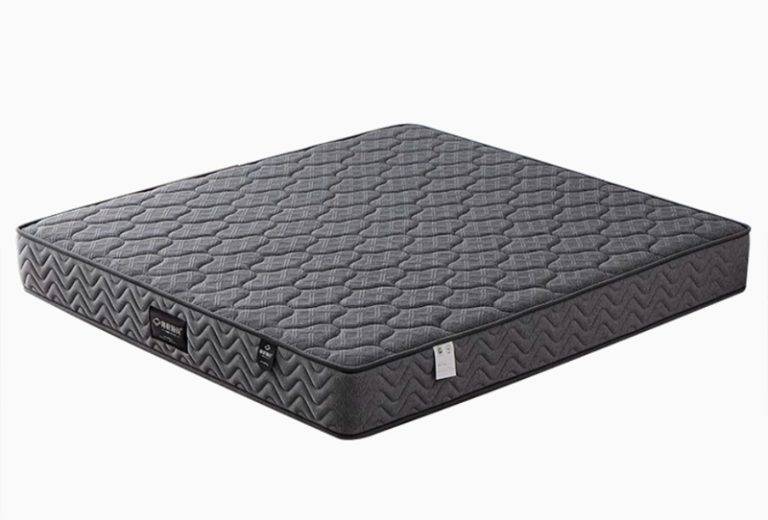
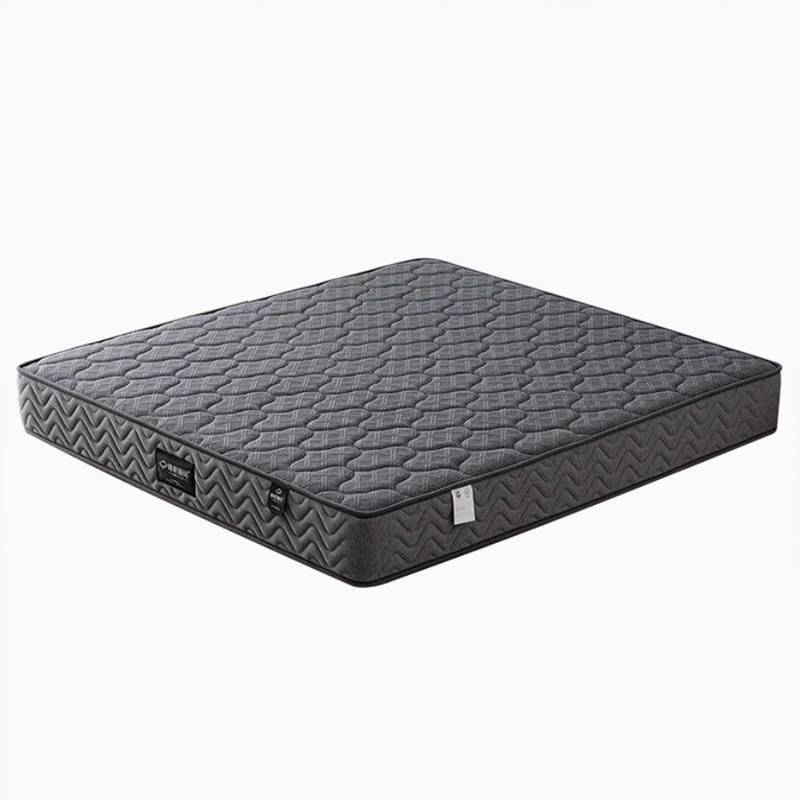
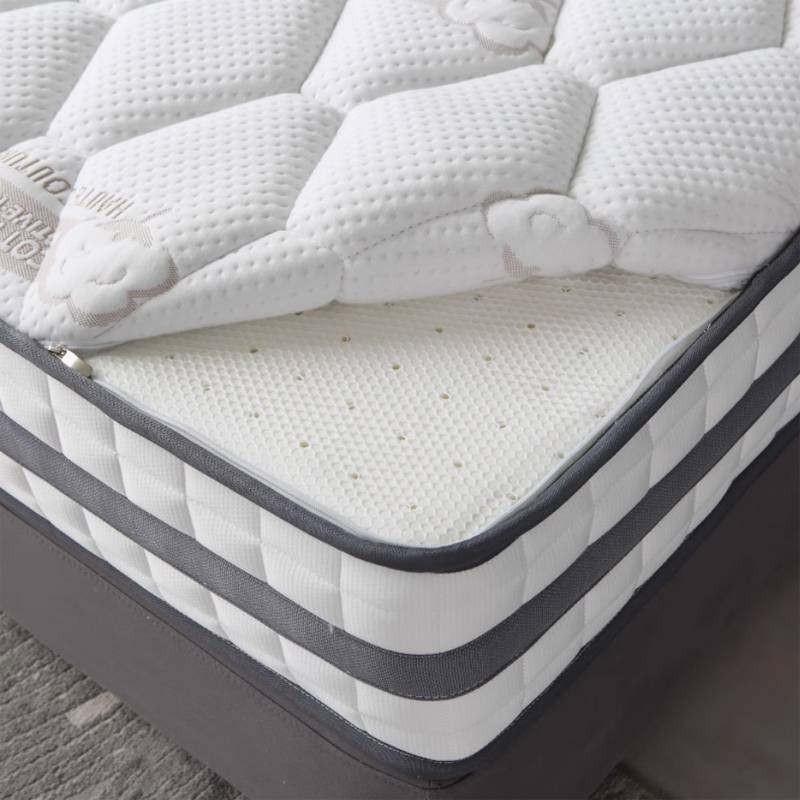
The simplest difference is the support core. A memory foam mattress is usually built with a high-density foam base and one or more comfort layers above it. A hybrid mattress uses an innerspring or pocketed coil support system with foam, latex, fiber, or other comfort materials above the coils. This changes how the mattress responds to weight, heat, movement, and edge pressure.
In a foam mattress, the entire structure depends on foam density, layer thickness, and formulation. The product can feel quiet, stable, and body-contouring. In a hybrid mattress, the coil system adds bounce, airflow, and resilient support. The comfort layers above the coils determine how soft or pressure-relieving the surface feels.
| Feature | Memory Foam Mattress | Hybrid Mattress |
|---|---|---|
| Support core | High-density foam | Coils or pocket springs |
| Surface feel | Contouring and slower response | Responsive with foam comfort |
| Cooling potential | Depends on foam and cover design | Often stronger airflow through coils |
| Edge support | Depends on foam density and border design | Can be reinforced with coil or foam encasement |
| B2B positioning | Efficient, modern, pressure-relieving | Upgraded, supportive, breathable |
A buyer should never make the decision from the category name alone. A low-quality hybrid can perform worse than a well-built foam mattress. A weak foam core can sag faster than a properly engineered hybrid. Construction details matter more than labels.
Comfort, Pressure Relief, and Sleeper Expectations
Comfort language should also match the sales channel. A wholesale buyer selling to showrooms can train staff to describe surface feel in person. An online seller must explain the feel with words, images, and comparison tables. A hotel buyer may not need dramatic softness, but needs a balanced feel that works for many guests. The same mattress can receive different feedback depending on where it is sold, so comfort should be designed around the buyer profile rather than a generic ideal.
Memory foam became popular because it can contour closely to the body. That contouring can reduce pressure around shoulders, hips, and other contact points. For retail customers who like a hugged feeling, this can be a strong selling point. For side sleepers, a well-designed foam comfort layer can be especially attractive.
Hybrid mattresses can also offer pressure relief, but the feel is different. The coil system underneath creates more pushback and responsiveness. This can help sleepers who do not like feeling stuck in the mattress. It can also help buyers position hybrids for back sleepers, combination sleepers, and customers who want a balance between cushioning and support.
From a B2B angle, comfort should be translated into product language. Do not simply list a mattress as soft, medium, or firm without explaining the layer structure. A useful specification might say that the product uses a foam comfort layer for cushioning, a transition layer to reduce sinkage, and a coil support core for resilience. This gives buyers a clearer sales story.
Cooling, Airflow, and Market Positioning
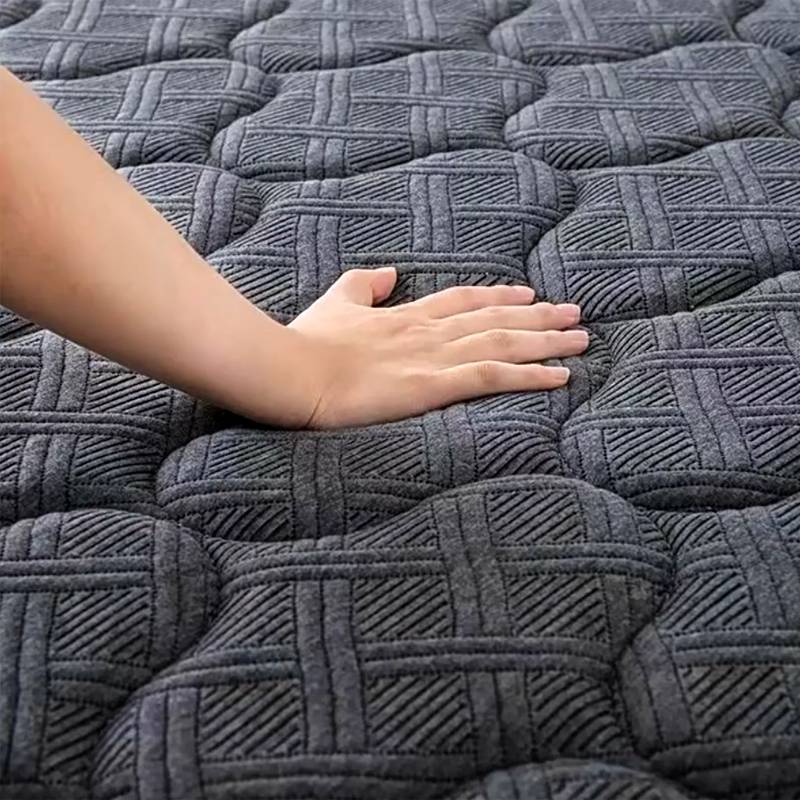
Cooling claims should be handled carefully. It is better to describe construction honestly than to promise that a mattress will always sleep cool. A B2B buyer can ask the factory about breathable covers, coil ventilation, foam perforation, and whether the mattress is suitable for warm climates. For sales copy, phrases like breathable construction and airflow-friendly coil support are usually safer and clearer than exaggerated cooling promises that may create complaints.
Temperature regulation is one of the biggest reasons customers compare hybrid mattress vs memory foam. Traditional memory foam can hold heat because it contours closely and has a dense structure. Modern foam designs may use gel, open-cell structures, perforations, or breathable covers to improve airflow, but the buyer should still review the full construction.
Hybrid mattresses often have an advantage in airflow because the coil core leaves more open space inside the mattress. This does not automatically make every hybrid cool, but it gives the design more room to manage heat. The cover fabric, foam layers, quilting, and mattress thickness still matter.
For hot climates, hospitality projects, and markets where customers frequently ask about cooling, hybrid mattresses can be easier to position. For online retail programs where compression and value are priorities, foam mattresses can still work well if the cooling story is honest and supported by material choices.
Motion Isolation, Edge Support, and Couple Use
Couple use is an important retail and hospitality angle because it combines several performance factors. A customer sharing a mattress may notice motion transfer, edge stability, noise, and temperature more than a single sleeper. A mattress line that can explain these factors clearly often creates stronger product confidence. For B2B buyers, this is a chance to build side-by-side comparison content and product labels that help customers select the right model without guessing.
Motion isolation is important for couples, hotels, rentals, and family homes. Memory foam usually performs well because foam absorbs movement. If one sleeper turns or gets out of bed, the movement is less likely to travel across the surface. This can be a strong benefit for customers who are sensitive to sleep disturbance.
Hybrid mattresses vary by coil type. Pocketed coils can reduce motion transfer better than connected spring systems because each coil moves more independently. However, the coil layer still adds responsiveness, so the mattress may feel livelier than all-foam models. Buyers should test motion transfer in real samples instead of assuming all hybrids behave the same.
Edge support is another major difference. A hybrid can use reinforced coils or foam encasement around the perimeter. This helps users sit on the edge and can make the mattress feel larger. Foam mattresses can also have edge support, but it depends on density and border design. For hotel rooms and retail customers who share a bed, edge performance can influence satisfaction.
Packaging, Compression, and Container Planning
Container planning should be reviewed before a final quotation is accepted. Two mattresses with similar unit prices can have different landed costs if their carton dimensions, compression method, or loading quantities differ. Buyers should compare not only factory price but also cubic efficiency, damage risk, and warehouse handling. If a mattress needs a longer recovery period, that instruction should be visible on the carton and included in customer-facing materials.
B2B mattress decisions are often shaped by logistics. Foam mattresses are commonly used in compressed and rolled packaging, which can support efficient storage and shipping. Hybrid mattresses can also be compressed, but the coil system, comfort layer thickness, and recovery requirements must be reviewed carefully.
A buyer should ask for packed size, roll diameter, carton dimensions, net weight, gross weight, loading quantity, and recovery time. A mattress that looks profitable at the product cost level may become less attractive after freight, warehouse handling, and last-mile delivery are included.
For private label programs, packaging is part of the brand experience. Clear labels, durable cartons, moisture protection, instruction sheets, and recovery guidance can reduce after-sales questions. If customers open a compressed mattress and do not understand the recovery period, they may judge the product too early.
Quality Inspection and Material Specifications
A useful inspection checklist should be practical enough for factory, third-party inspection, and buyer teams to use. It should include measurable criteria, not only visual comments. For example, height tolerance, cover alignment, zipper function, label placement, carton condition, and recovery time are easier to check than vague terms like premium feel. When specifications are clear, disputes become easier to resolve and repeat orders become more stable.
Quality control should be built into the specification before production. For memory foam mattresses, buyers should confirm foam density, layer thickness, firmness range, cover material, quilting, odor control, and compression recovery. For hybrid mattresses, buyers should also confirm coil type, coil count range, wire gauge, edge reinforcement, and whether the spring system is pocketed or connected.
External certification and material programs may matter depending on the market. For example, CertiPUR-US provides a well-known foam certification program in the mattress industry. Buyers should confirm what certifications are required in their target market and request current documents from suppliers rather than relying on generic claims.
Inspection should include dimensions, appearance, stitching, cover fit, label placement, compression recovery, firmness consistency, and packaging. For hybrid mattresses, check the spring noise and edge stability. For foam mattresses, check whether the product expands evenly and whether the cover fits properly after recovery.
Which Construction Fits Each Sales Channel?
Channel fit can also influence assortment planning. A buyer does not need to choose only one mattress type. A good retail program might use foam mattresses as value models, hybrid mattresses as upgraded models, and innerspring mattresses as traditional support options. This creates a ladder of choices. The sales team can guide customers by comfort preference, budget, and support expectations instead of presenting every mattress as if it serves the same purpose.
Online retail and compressed mattress programs
Foam mattresses can be attractive for online retail because they are easy to explain, efficient to package, and familiar to customers. If the target buyer wants pressure relief and simple delivery, foam can be a strong choice. However, the product must manage heat and support clearly enough to avoid complaints.
Furniture retailers and showroom buyers
Hybrid mattresses often perform well in showrooms because customers can feel the bounce, edge support, and surface comfort immediately. A hybrid can also support a higher perceived value story when the construction is explained well. Retail sales teams should be trained to describe the coil core and comfort layers in simple language.
Hotels, apartments, and project buyers
For hospitality and project use, consistency and durability are critical. A hybrid mattress may be useful where support, airflow, and edge stability are priorities. A foam mattress may be useful where quietness, motion isolation, and efficient logistics matter. The final choice should be based on use frequency, room type, replacement cycle, and target guest experience.
Custom Manufacturing Decisions for Bulk Orders
For custom manufacturing, sample approval should include both technical and commercial review. The technical team should check construction, firmness, dimensions, and packaging. The sales team should check whether the product story is clear and whether the mattress can be explained in a few simple points. The purchasing team should check cost, MOQ, lead time, and repeat-order stability. A mattress that passes only one of these reviews may still fail as a business product.
A manufacturer can help buyers turn a general construction choice into a sellable product. Custom decisions include mattress height, firmness, cover fabric, quilting pattern, handle design, label placement, packaging format, and whether the product line should include multiple firmness levels.
For a hybrid mattress, buyers may adjust coil structure, comfort foam thickness, border reinforcement, and cover design. For memory foam, buyers may adjust foam density, transition layer design, cooling features, and compression requirements. Each change affects cost, feel, packaging, and sales positioning.
MINGHUANG offers mattress solutions for B2B buyers, including Hybrid Mattress, Foam Mattress, and Innerspring Mattress options. If you are building a wholesale mattress line, you can contact us with your target market, size range, packaging needs, and preferred comfort profile.
Final B2B Decision Framework
A final decision should also include risk management. If your market has many first-time mattress buyers, simple foam products may reduce confusion. If your customers compare features aggressively, hybrid construction may help you communicate more value. If your buyers are hotels or furnished apartment operators, consistency and service support may matter more than the most fashionable construction. The best mattress program is the one your company can sell, deliver, and support confidently.
Choose memory foam when your priority is contouring comfort, strong motion isolation, simple construction, compressed packaging, and a clean value story. Choose hybrid when your priority is responsive support, airflow, edge strength, upgraded positioning, and a construction story that combines coils with comfort layers.
The best B2B decision is not based on trend alone. It is based on who will buy the mattress, how often it will be used, how it will be shipped, how your sales team will explain it, and how your after-sales team will handle expectations. When the product matches the channel, both memory foam and hybrid mattresses can perform well.
Final takeaway: the hybrid mattress vs memory foam question should be treated as a product strategy question. Compare construction, comfort, logistics, inspection standards, and market positioning before choosing the model that belongs in your next collection.
B2B FAQ for Hybrid Mattress vs Memory Foam
Is a hybrid mattress always better than memory foam?
No. A hybrid mattress is not automatically better, and memory foam is not automatically more basic. The better choice depends on the target user, the layer quality, the support design, and the sales channel. A high-density memory foam mattress with a breathable cover and stable support can outperform a low-quality hybrid. A well-designed hybrid can outperform a weak all-foam model in edge support and airflow. B2B buyers should compare specifications and sample performance rather than rely on category names.
Which mattress type is easier for private label development?
Memory foam can be easier when the buyer needs efficient packaging, fewer components, and a clear value model. Hybrid can be better when the buyer wants an upgraded story with coil support, airflow, and stronger showroom appeal. Private label buyers should choose the construction that supports their brand promise. If the brand is focused on affordable online delivery, foam may fit better. If the brand is focused on premium comfort and support, hybrid may create more selling points.
What should importers ask before approving a mattress sample?
Importers should ask for mattress height, layer structure, foam density, coil type, firmness target, cover fabric, carton size, gross weight, compression method, recovery time, label placement, and inspection tolerance. They should also test the product after unpacking and again after recovery. A mattress that looks good immediately after opening may feel different after it fully expands. Sample approval should reflect the real customer experience.
How can this comparison improve website inquiries?
A detailed comparison article can attract buyers who are already researching product differences. To turn that traffic into inquiries, connect the article to product pages, add internal links, and invite readers to share their target market and specification needs. A buyer who searches hybrid mattress vs memory foam may not be ready to order immediately, but they are often ready to ask informed questions. That is the right moment for a manufacturer to show expertise.