Table of Contents
If you sell furniture to apartments, hotels, rental properties, furniture retailers, or import channels, sofa bed dimensions are not a small product detail. They decide whether the sofa fits through the door, whether the bed opens without blocking the room, whether two adults can sleep comfortably, whether packaging protects the mechanism, and whether the final buyer feels the product was described honestly.
Many high-ranking sofa bed guides answer a simple consumer question: “What size sofa bed should I buy?” That is useful, but it is incomplete for B2B buyers. A furniture importer or project buyer needs to think one level deeper. You need a dimension strategy that connects the closed sofa, the open sleeping surface, the mattress thickness, the conversion mechanism, the carton size, the assembly process, and the marketing copy your sales team will use.
This guide looks at sofa bed dimensions from a manufacturer perspective. It is written for buyers who need repeatable specifications, not one-time shopping advice. The goal is to help you develop or source sofa beds that fit real rooms, reduce complaints, and create stronger inquiry quality for your business.
Why Sofa Bed Dimensions Are a B2B Profit Issue
For a consumer, wrong sofa bed dimensions are frustrating. For a B2B buyer, they can become expensive. A few centimeters or inches can affect container loading, carton count, warehouse storage, showroom display, freight quotations, room layout drawings, and customer return risk. That is why dimension control should be treated as a commercial decision, not only a design decision.
Consider a distributor selling to small apartment owners. If the online product page only lists the closed sofa width, customers may order without understanding how much floor space is needed when the bed opens. The sofa arrives, the frame opens into a walkway, and the customer blames the seller. The product may be structurally fine, but the dimension communication failed. Now the distributor handles complaints, returns, replacement parts, or negative reviews.
For hotel and serviced-apartment projects, the stakes are different. A buyer may need sofa beds for dozens or hundreds of rooms. If the open length blocks a wardrobe, desk, balcony door, or entry path, the problem repeats across every room. A small specification error becomes a project-wide cost. B2B buyers should therefore ask manufacturers for closed dimensions, open dimensions, mattress dimensions, seat height, back height, arm width, carton dimensions, net weight, gross weight, and assembly clearance before approving an order.
This is also why custom production can create value. A standard sofa bed may be acceptable for general retail, but a custom sofa bed can be adjusted for a specific market: narrower arms for compact apartments, deeper seats for lounge use, stronger mechanisms for hospitality, or carton dimensions optimized for container loading. If you are developing a private-label line, start the conversation with the exact rooms and buyers you want to serve.
What Users Really Mean When They Search Sofa Bed Dimensions
The keyword sofa bed dimensions looks simple, but it contains several search intents. Some users want a size chart. Some want to know whether a queen sleeper sofa will fit in a guest room. Some want to compare full and queen sleeping surfaces. Others are trying to avoid the common problem of buying a sofa bed that looks compact when closed but becomes too large when opened.
Current high-visibility content in this topic usually covers twin, full, queen, and sometimes king sleeper sofa sizes. It also talks about mattress thickness, pull-out mechanisms, click-clack frames, small rooms, guest rooms, and measuring doorways. Those themes are popular because they answer real buyer anxiety: “Will this fit, and will someone sleep comfortably on it?”
For B2B content, this search behavior suggests a strong opportunity. Instead of writing only a basic size chart, manufacturers and wholesalers can explain the purchase decision more deeply. A useful article should show how dimensions affect product selection, room planning, comfort, delivery, and sales conversion. This is the angle that can make a blog post more valuable than a thin product description.
For example, a retail customer may search for “queen sofa bed dimensions.” A furniture importer may search the same phrase, but their real concern is whether a queen-size sleeping surface can be built into a product that still ships efficiently and fits common apartment layouts. A hotel buyer may search because they need to convert a room into flexible guest accommodation without making the room feel crowded. One keyword, several business needs.
A strong sofa bed product page and blog strategy should therefore use dimension language in several places: the title, product specification table, image alt text, FAQ section, comparison table, and call-to-action. For MINGHUANG, a useful internal path is to connect educational articles to the Sofa Bed product page and then guide qualified buyers to contact the factory for custom requirements.
Closed Size vs Open Size: The Measurement Most Buyers Miss
The most common sofa bed dimension mistake is listing only the closed sofa size. Closed size matters because it tells buyers how the product looks as a sofa. But open size matters because it tells buyers whether the product can function as a bed. A sofa bed is successful only when both conditions are true.
Closed size usually includes overall width, overall depth, overall height, seat depth, seat height, arm height, and back height. These measurements influence the visual scale of the product, the number of seats, the comfort of daily sitting, and how the sofa fits against a wall. In retail listings, closed width is often the hero measurement because it is easy to understand.
Open size adds a second layer. It includes the full length from the back of the sofa to the foot of the bed, the width of the sleeping surface, the height of the sleeping surface from the floor, the clearance needed in front of the sofa, and the space needed for a person to move around the bed. For small apartments and hotel rooms, this is often the measurement that decides whether the product is practical.
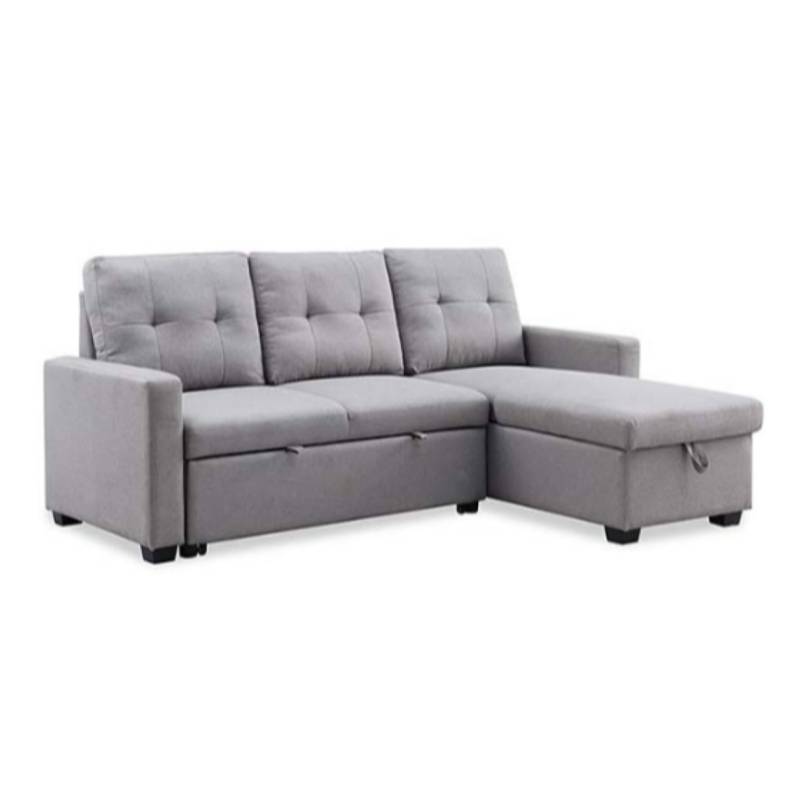
A professional sofa bed specification should show the product in at least two drawings: closed mode and bed mode. For B2B sales, a third drawing is even better: a room layout example showing recommended clearance in front and on each side. This helps importers, project buyers, and retailers explain the product more clearly to their customers.
As a practical rule, buyers should not approve a sofa bed sample until they have checked three spaces: the customer’s room space, the delivery path, and the carton storage space. A product can fail at any of these stages. It might fit the room but not the elevator. It might fit the elevator but not the carton loading plan. It might load well but leave too little clearance when opened. A dimension sheet should protect against all three risks.
Standard Sofa Bed Dimensions by Sleeping Surface
Although sofa bed dimensions vary by manufacturer, the sleeping surface is often discussed with familiar mattress language: twin, full, queen, and sometimes king. The challenge is that sofa bed mattresses are not always identical to standard bedroom mattresses. Some sleeper sofas use shorter mattresses because the mechanism must fold inside the frame. That is why buyers should always confirm the actual sleeping width and length rather than relying only on the size name.
| Sleeping Surface | Common Use Case | What B2B Buyers Should Confirm |
|---|---|---|
| Twin sofa bed | Small apartments, chair beds, children, single guests | Open length, seat-to-bed transition, bedding compatibility |
| Full sofa bed | Guest rooms, compact rentals, solo adults needing more width | Whether the width is comfortable for the target user and whether sheets are easy to source |
| Queen sofa bed | Hotels, serviced apartments, family homes, upgraded retail lines | Open footprint, mechanism strength, mattress support, carton size |
| Custom sofa bed | Private label lines, project orders, regional markets | Exact sleeping surface, closed sofa size, foam thickness, packaging and MOQ |
When writing your own product specifications, avoid vague statements such as “large size” or “sleeps two.” Instead, show real numbers. If the sleeping surface is smaller than a standard queen mattress, say so clearly. Honest dimension communication improves trust and reduces return pressure.
For market reference, many mattress guides explain the differences between standard full and queen mattress sizes. That information is useful background, but sofa bed buyers should remember that the folding mechanism can change the final usable surface. If your market uses regional size names, such as UK double, EU double, or US full, include both local naming and actual dimensions in inches and centimeters. This makes the product easier for international buyers to compare.
For importers, the best approach is to request a manufacturer size chart that includes tolerances. Upholstered products can have small variations because fabric, foam, and hand assembly affect the final measurement. A clear tolerance range helps your team set realistic quality inspection standards before shipment.
Mechanism Type Changes the Real Footprint
Two sofa beds with similar closed dimensions can behave very differently when opened. The mechanism determines how the product converts, how much space it needs, how thick the mattress can be, how heavy the frame feels, and how easy the user experience is. This is why mechanism type should be part of every sofa bed dimensions discussion.
Pull-out mechanism
A pull-out sofa bed usually stores a folded bed frame and mattress inside the sofa. It can create a more traditional sleeping surface, but it needs enough room in front of the sofa to open fully. B2B buyers should confirm the open length, the weight of the mechanism, the mattress thickness limit, and the strength of the supporting frame.
Click-clack or fold-down mechanism
A click-clack sofa bed often converts by lowering the backrest. It can be compact and easy to use, making it attractive for small apartments, student housing, and economical retail ranges. However, the sleeping surface may include seams, and the comfort level depends heavily on cushion structure and foam density. Buyers should review how flat the surface becomes and whether the closed sofa depth is acceptable for daily seating.
Platform or slide-out mechanism
Some modern sofa beds use a slide-out platform or modular extension. These designs can feel more like a lounge sofa during the day and a broad resting surface at night. They may work well for rental apartments and casual guest use. The key measurements include platform extension length, support height, wheel or rail clearance, and the strength of the sliding system.
For product development, mechanism choice should come before final dimension approval. If a buyer requests a specific closed width but also wants a queen-like sleeping surface, the manufacturer must check whether the mechanism, arms, frame, and mattress can work together. A beautiful drawing is not enough; the opening action must be tested in real space.
Mattress Thickness and Comfort Clearance
Many sofa bed complaints are not about width or length. They are about comfort. A sofa bed can have acceptable dimensions on paper but still disappoint users if the mattress is too thin, the support bars can be felt, or the foam does not recover well after folding. Mattress thickness is therefore an important part of sofa bed dimensions.
In a standard bed, the mattress can be thick because it sits permanently on a frame. In a sofa bed, the mattress may need to fold, roll, or compress inside the sofa body. This limits thickness. If the mattress is too thick, the mechanism may not close properly. If it is too thin, comfort can suffer. A manufacturer must balance foldability, support, durability, and cost.
For B2B orders, ask for the mattress thickness, foam type, cover material, and support structure. If the product is intended for frequent sleeping, such as serviced apartments or long-stay hotels, comfort should be tested more seriously than a sofa bed used only a few times per year. The buyer should also check how the mattress feels after repeated opening and closing.
There is also a clearance issue. The mattress should fit into the folded mechanism without creating pressure points that deform the foam or stress the frame. This is where manufacturer experience matters. A factory that understands sofa bed construction can recommend the right combination of mattress thickness, foam firmness, and mechanism type for the target use case.
For a stronger product page, do not simply write “comfortable mattress.” Explain the comfort logic: support layer, foam feel, sleeping surface, and intended frequency of use. Buyers trust details more than adjectives.
Room Planning Rules for Apartments, Hotels, and Rentals
Sofa bed dimensions only become meaningful when placed inside a real room. A compact product may still be wrong for a narrow room if it opens in the wrong direction. A larger product may work well in a hotel suite if the layout allows enough clearance. B2B buyers should match sofa bed size to room type, not only to sleeping capacity.
For small apartments, the open bed should not block the main walkway, kitchen access, bathroom door, wardrobe, or balcony. A buyer should imagine the room at night, not only during the day. If the sofa bed becomes the main bed, users need space for bedding storage and daily conversion. For this market, a compact mechanism and easy operation may be more important than maximum sleeping width.
For hotels, the sofa bed may be used by families, children, or extra guests. The room should still feel safe and usable after the sofa opens. Housekeeping also needs enough space to make the bed and clean around it. A product that looks good in a photo may create operational problems if staff cannot move around it easily.
For rental properties, durability and simplicity matter. Guests may not read instructions carefully. The mechanism should be intuitive, and the open footprint should not create a trip hazard. In this market, the best sofa bed is often the one that is easiest to understand and hardest to misuse.
A useful specification sheet should include recommended room sizes and layout notes. Even if those numbers are not strict rules, they help sales teams and customers make better decisions. They also create richer SEO content because they answer the questions buyers actually ask before ordering.
Packaging, Container Loading, and Delivery Measurements
Retail articles about sofa bed dimensions usually stop at the room. B2B buyers need to go further. The product must move through production, packaging, warehousing, export loading, last-mile delivery, and installation. Each stage has measurements that affect cost and customer satisfaction.
Carton dimensions affect how many units fit in a container and how much protection surrounds the frame, arms, legs, and mechanism. A small reduction in carton size can improve loading efficiency, but weak packaging can lead to damage. A larger carton may protect the product better but increase freight cost. The right answer depends on product value, market expectations, and shipping route.
Delivery path dimensions are just as important. A sofa bed may need to pass through apartment doors, elevators, stairs, corridors, and tight corners. If the product ships partly assembled, the carton may be larger but installation is easier. If it ships knocked down, the carton may be more efficient but assembly instructions must be clear. B2B buyers should discuss this with the manufacturer before finalizing the structure.
For project orders, request sample cartons and test them before bulk production. Check not only the product but the entire package: carton strength, corner protection, hardware bag, instruction sheet, labels, and barcode placement. Packaging is part of the buyer experience. A product that arrives cleanly and assembles smoothly creates fewer after-sales messages.
If you want to build a serious wholesale sofa bed line, include carton size and loading quantity in your internal product file. Your public website may not need every logistics detail, but your sales team should have it ready for qualified inquiries.
How to Build a Sofa Bed Size Specification Sheet
A professional sofa bed specification sheet should help buyers make decisions quickly. It should also prevent misunderstandings between the buyer, manufacturer, quality inspector, freight forwarder, and sales team. The best specification sheets combine numbers, diagrams, material details, and practical notes.
At minimum, include overall closed width, closed depth, closed height, seat height, seat depth, arm height, open width, open length, sleeping surface width, sleeping surface length, mattress thickness, net weight, gross weight, carton dimensions, and assembly requirements. If the product has removable legs, adjustable headrests, storage, or modular sections, include those measurements too.
Use both inches and centimeters when selling internationally. A buyer in the United States may think in inches, while buyers in Europe, the Middle East, and many Asian markets may expect centimeters. Dual units reduce friction and make the product easier to compare. Also include measurement tolerance, especially for upholstered parts.
Photos should support the data. Use one image in sofa mode, one image in open bed mode, and one diagram with arrows showing key dimensions. If you have a lifestyle image, make sure it does not replace the technical image. Lifestyle photos create desire; dimension diagrams create confidence. Both are useful, but they serve different purposes.
For SEO, turn the specification sheet into readable content. A table can answer quick questions, while the surrounding text explains how to choose. This combination helps users who scan and users who need depth. It also makes the page more likely to attract long-tail searches such as “queen sofa bed dimensions,” “sofa bed open length,” and “small apartment sofa bed size.”
Quality, Safety, and Material Details Linked to Dimensions
Dimensions are connected to quality. A wider sleeping surface may require stronger support. A thinner arm may save space but must still feel stable. A deeper seat may improve lounging comfort but can make the closed sofa too large for small rooms. A compact folded frame may improve space efficiency but limit mattress thickness. Every dimension choice has a quality consequence.
For commercial and institutional furniture buyers, standards and material expectations may also matter. BIFMA publishes information about furniture standards related to safety, performance, durability, and sustainability. While not every residential sofa bed order will require the same standards, the idea is useful: furniture should be evaluated not only by appearance but by performance in real use.
For upholstered furniture in the United States, buyers may also need to pay attention to flammability regulations. The Cornell Legal Information Institute page on 16 CFR Part 1640 provides access to the federal standard for upholstered furniture flammability. Importers should always confirm the regulations that apply in their target market before shipment.
Indoor air quality can be another concern, especially for furniture using composite wood, foam, fabric, adhesives, or finishes. The U.S. EPA explains formaldehyde and indoor air quality, including its connection to certain building and furnishing materials. B2B buyers should ask suppliers about material compliance, test reports, and market-specific requirements instead of assuming that all regions follow the same rules.
This does not mean every blog post should become a legal document. It means serious buyers appreciate serious information. When your content connects dimensions with structure, comfort, safety, and compliance awareness, it speaks to professional buyers rather than casual browsers.
Common Dimension Mistakes That Create Returns
Return risk often begins before the product ships. It starts with unclear information. Below are common sofa bed dimension mistakes that B2B buyers should avoid when sourcing, listing, or developing a product.
- Listing only the closed sofa width. Buyers need open length and sleeping surface dimensions too.
- Using size names without real measurements. Full, queen, and double can mean different things across markets.
- Ignoring the delivery path. Doorways, elevators, stair turns, and corridors can create problems even when the room is large enough.
- Forgetting bedding compatibility. If the sleeping surface is unusual, customers may struggle to find sheets.
- Overpromising comfort. A thin mattress may be fine for occasional use but wrong for frequent sleeping.
- Not testing the mechanism repeatedly. The product should open and close smoothly after repeated use.
- Using lifestyle photos without diagrams. Attractive images help sales, but dimension diagrams help prevent complaints.
- Not giving measurement tolerance. Upholstered furniture can vary slightly, and inspectors need a reasonable standard.
The solution is not to make every product oversized. The solution is to match dimensions to the target customer. A compact sofa bed for a studio apartment should be judged differently from a larger sofa bed for a hotel family room. Clear positioning helps the buyer choose correctly and helps the manufacturer engineer the product properly.
For website content, consider adding a short FAQ section below the main article. Questions such as “How much space do you need to open a sofa bed?” and “Is a queen sofa bed the same size as a queen mattress?” can capture long-tail traffic and reduce sales friction. For this sample article, the main structure already covers those questions in depth, but a future product page could use FAQ schema if your SEO setup supports it.
Choosing a Custom Sofa Bed Manufacturer
The right sofa bed manufacturer should help you translate market demand into a practical product. That means discussing more than color and price. A useful supplier will ask about target room size, customer type, expected sleeping frequency, mechanism preference, upholstery material, packaging method, order quantity, and destination market requirements.
If your business sells to retailers, the manufacturer should help create attractive and understandable specifications for product pages. If you sell to hotels or projects, the manufacturer should support sample testing, room layout review, and stable repeat production. If you sell private-label furniture, the manufacturer should help balance distinctive design with reliable structure and manageable cost.
Before placing a bulk order, ask for a sample and check it in both sofa and bed mode. Measure the closed size, open size, sleeping surface, mattress thickness, carton size, and assembly time. Take photos from the same angles you will use in your sales materials. If the product is for a project, test it in a room layout similar to the final installation environment.
MINGHUANG manufactures sofa, sofa bed, bed frame, and mattress solutions for B2B buyers. If you are developing a sofa bed line and need help with dimensions, mechanism selection, upholstery, packaging, or custom specifications, visit our Sofa Bed product page or send us your project requirements. A clear dimension plan at the beginning can save time, cost, and customer service pressure later.
Final takeaway: Sofa bed dimensions are not only about size. They are about fit, comfort, delivery, usability, and trust. When B2B buyers treat dimensions as part of the full product strategy, they can choose sofa beds that serve real rooms, real users, and real business goals.